Explain How Prokaryotes and Eukaryotes Deal With the End-replication Problem
Define the end replication problem in eukaryotes and explain how eukaryotic cells deal with the problem. We think that the prokaryotic life forms on this planet evolved first.

Dna Replication Prokaryotic Vs Eukaryotic Enzymes Youtube
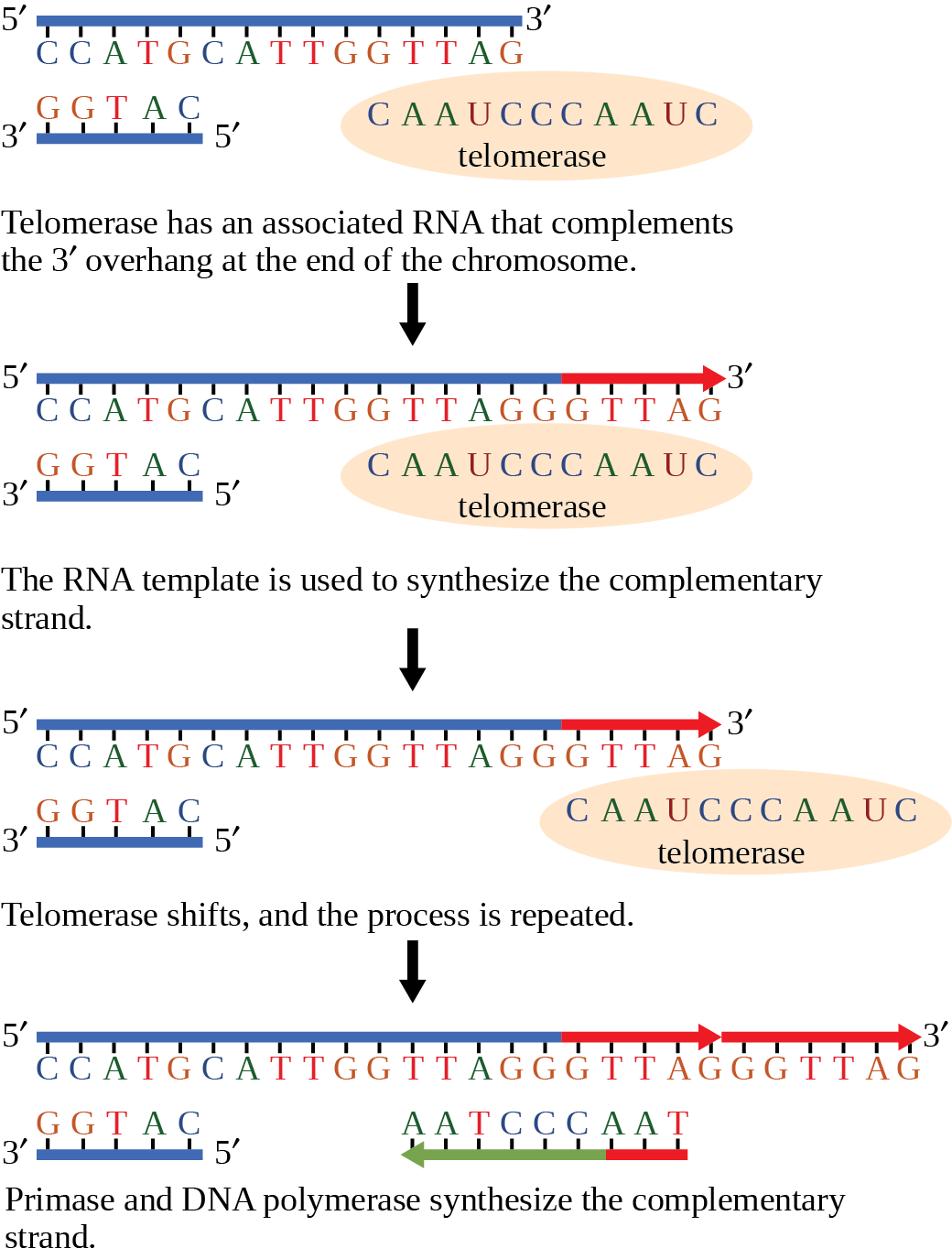
Telomeres extend the 3 end of the.
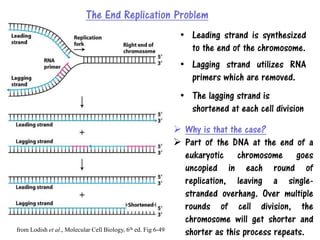
. Eukaryotic DNA contains a large number of genes. What two purposes do. The end replication problem is handled in eukaryotic cells by telomere regions and telomerase.
What is a telomere. The quantity of DNA is more than prokaryotes. This is known as the end replication problem.
The prokaryotes which include bacteria and archaea are mostly single-celled organisms that by definition lack membrane-bound nuclei and other organelles. DNA replication in eukaryotic cells initiates from many replication origins which fire throughout the S phase of the cell cycle in a predictable pattern. Prokaryotic cells were formed before eukaryotic cells and have a much simpler structure than the latter.
The origin of replication is recognized by certain proteins that bind to this site. 1 Lagging strand template binding. After two rounds of replication only mixed DNA molecules were present in the gradient.
The replication process is halted as the leading strand of one replication bubble meets the lagging strand of another replication bubble. Some origins fire early others late. And the eukaryotic cells which poses nuclei and indeed have a highly complex cytoplasm and overall cellular architecture.
The eukaryotic chromosome is linear and highly coiled around. Compare aerobic respiration and fermentation in terms of. After one round of replication only mixed DNA molecules were present in native gradients.
These ends pose a problem for DNA replication. Only very few proteins interacts with prokaryotic DNA. The DNA at the very end.
Eukaryotic genomes are highly complex and divided into linear chromosomes that require end protection from unwarranted fusions recombination and degradation in order to. Learn vocabulary terms and more with flashcards games and other study tools. A 5 cap is added to the beginning of.
What is the ultimate source of energy on this planet and how all organisms are dependent on it. An enzyme called helicase unwinds the DNA by breaking the hydrogen bonds between the nitrogenous base. Explain why this is so.
The end-replication problem telomere problem exists in eukaryotic chromosomes and is characterized by the chromosomes shortening with each round of DNA replication. The quantity of DNA is comparatively less. Prokaryotic DNA contains a small number of gene.
This is the end of replication problem and it is solved by putting a DNA cap on the ends of DNA called a telomere which does not code for any protein thus when this information. The prokaryotic chromosome is a circular molecule with a less extensive coiling structure than eukaryotic chromosomes. The later acquisition of telomerase not only solved the end-replication problem but ensured the presence of the same sequence at all chromosome ends.
Enzymes and Their Function. Module 3E DNA Structure and Replication There are 5 possible nitrogenous bases and 2 possible sugars. Large number of proteins interacts with.
Start studying End Replication Problem. The enzymes involved in prokaryotic DNA replication and their functions are summarized on this table. DNA replication occurs within the nucleus of the cell.
Similarities Between Prokaryotic and Eukaryotic. Unlike bacterial chromosomes the chromosomes of eukaryotes are linear rod-shaped meaning that they have ends. Both eukaryotic and prokaryotic cells have diverse DNA structures and chemical.
A bacterial chromosome is a. When an RNA transcript is first made in a eukaryotic cell it is considered a pre-mRNA and must be processed into a messenger RNA mRNA.
Dna Replication In Eukaryotes Biology 2e
Telomerase Replication

Replication 101 Prokaryotic Vs Eukaryotic Replication Youtube

Mrs Crawford S Cell Biology Test Chapter 14 And 15 Flashcards Quizlet
No comments for "Explain How Prokaryotes and Eukaryotes Deal With the End-replication Problem"
Post a Comment